
Reviews & Rants · High Five
The Greatest Hits Curse
By Peter David · August 13, 2026 · Cobra Kai Never Lies
Five artists were still white hot when somebody decided it was time for a greatest-hits album. Then came breakups, lineup disasters, commercial nosedives and one pattern that starts looking a little too fucking suspicious.
There are curses we’ve all heard about. The Madden Curse. The Sports Illustrated cover jinx. The supposed Best Supporting Actress curse, where winning an Oscar occasionally seems less like the beginning of something and more like Hollywood handing you a gold-plated watch at your retirement party. But I think I’ve found another one: The Greatest Hits Curse.
Think about it. A band spends years climbing the mountain. They release album after album, fill arenas, dominate radio, make increasingly expensive music videos and eventually accumulate enough songs that somebody at the record company says the most dangerous words in music: “You know what we should do? A greatest hits album.”
Sounds harmless. Celebratory, even. Look at everything you’ve accomplished! Here are all your biggest songs in one convenient package! Maybe we'll even throw in two new tracks so the people who already own everything have to buy it too. Except sometimes that album doesn't feel like a celebration when you look back at it. It feels like a tombstone.
So I started looking. Not for bands that released a greatest-hits album twenty years after anybody gave a shit. That proves nothing. I wanted artists who were still hot. Bands selling records, getting played on the radio and very much appearing to have plenty of road left in front of them. Then the greatest-hits album arrives, and shortly afterward somebody turns out the lights.
Coincidence? Who knows. Let's begin.
The High Five to the Face: Music presents the evidence in the case of The Greatest Hits Curse.
#5 · Bryan Adams
5. Bryan Adams — So Far So Good (1993)

If you weren't around for peak Bryan Adams, it's difficult to explain just how fucking enormous Bryan Adams was. This wasn't “hey, I remember that Bryan Adams song” Bryan Adams. Cuts Like a Knife had given us the title track and “Straight from the Heart,” then Reckless unloaded “Run to You,” “Heaven,” “Summer of '69,” “Somebody” and “It's Only Love.”
Then Waking Up the Neighbours arrived in 1991 and somehow made him an even bigger star. “(Everything I Do) I Do It for You” spent an eternity on the radio. “Can't Stop This Thing We Started” was another massive hit. “Do I Have to Say the Words?” hit the Top 20. He was selling millions of records and apparently had discovered a renewable natural resource consisting entirely of gigantic power ballads.
Along comes 1993, and somebody decided it was time to take inventory with So Far So Good, which may be the most unintentionally ominous album title in history. Because yeah, so far? Really fucking good.
After that...
The compilation itself was another monster, reaching No. 1 in the UK and remaining on the chart for an absurd amount of time. Adams wasn't some fading star whose label was cleaning out the vault. He was still at or near the height of his commercial power, which is exactly what makes this one interesting.
Here's where the curse gets sneaky, because he didn't immediately disappear. Adams still had hits. “Have You Ever Really Loved a Woman?” was huge. 18 til I Die performed well internationally. MTV Unplugged was a mild hit. He remained a successful touring artist and certainly didn't end up playing “Summer of '69” outside a 7-Eleven for gas money. But the Bryan Adams who seemed genetically engineered to produce gigantic American rock singles? That guy was leaving the building.
The greatest-hits album didn't mark the end of Bryan Adams. It marked the end of Peak Bryan Adams. At this point I wasn't ready to call it a curse, but I took notice.
CURSE EVIDENCE: Circumstantial. But noted.
#4 · Mötley Crüe
4. Mötley Crüe — Decade of Decadence '81–'91 (1991)
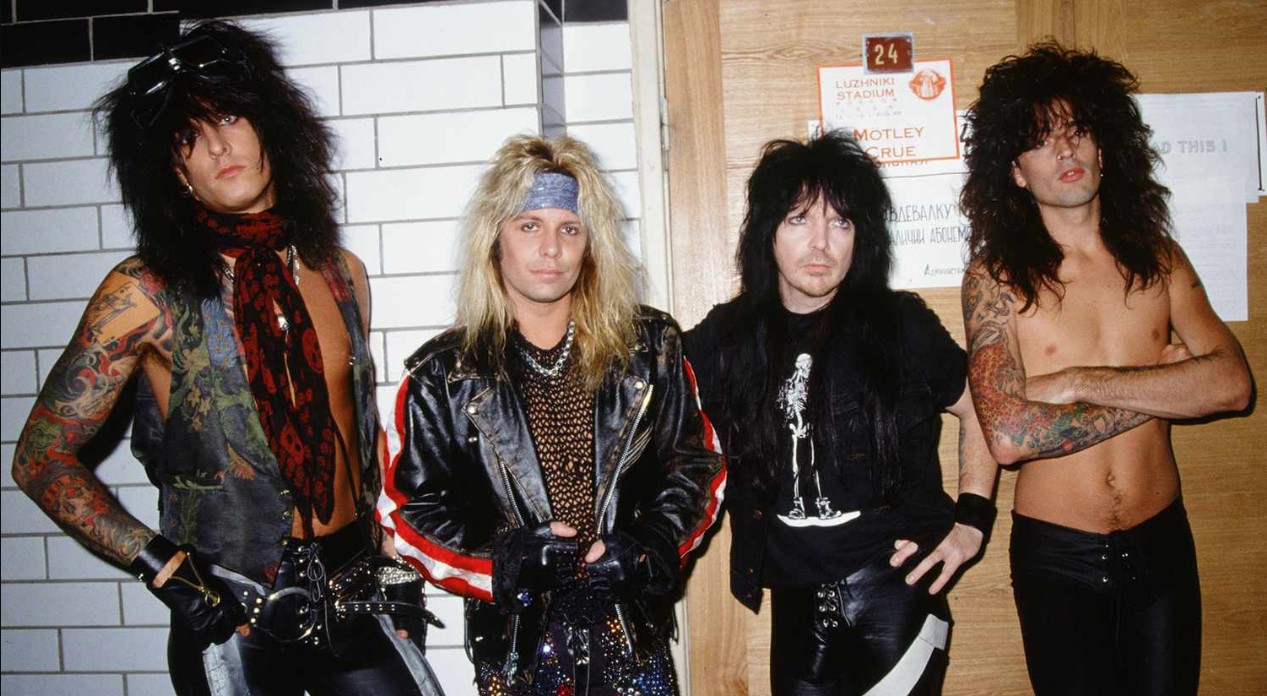
Now we're getting somewhere. In 1989, Mötley Crüe released Dr. Feelgood, which became the band's commercial peak and gave us “Dr. Feelgood,” “Kickstart My Heart,” “Without You” and “Don't Go Away Mad.”
Mötley Crüe had somehow survived drugs, arrests, overdoses, car crashes, Nikki Sixx actually dying for a minute and approximately 400 metric tons of hairspray. Nothing could seem to kill them. That is of course, until they released a greatest-hits album.
Decade of Decadence arrived in 1991, and this wasn't even some lazy recycling job. The thing had new material, including “Primal Scream.” They weren't being wheeled out for a nostalgia tour. This was still one of the biggest hard-rock bands in the world.
Then, like Mike Tyson's various first-round victims, Vince Neil was out. Grunge had kicked down the door. The band hired John Corabi as lead singer and released Mötley Crüe in 1994. Suddenly one of the defining bands of the previous decade was trying to figure out where the hell everybody went.
Now, was Decade of Decadence responsible for Vince leaving? No. Did the CD personally invent Nirvana? I don't think so. But look at the crime scene. Before greatest hits: Mötley Crüe at its commercial apex. After greatest hits: lead singer gone, musical landscape completely changed, commercial dominance finished.
They would reunite. They would tour successfully. I even saw them in concert after. They would remain famous. They'd eventually have The Dirt introduce the band to another generation. But the Mötley Crüe that could release a new album and immediately command the center of popular culture? 1991 was basically last call.
Okay, that's two. Now I got out the red string.
CURSE EVIDENCE: Two for Tuesday.
#3 · Van Halen
3. Van Halen — Best Of – Volume I (1996)
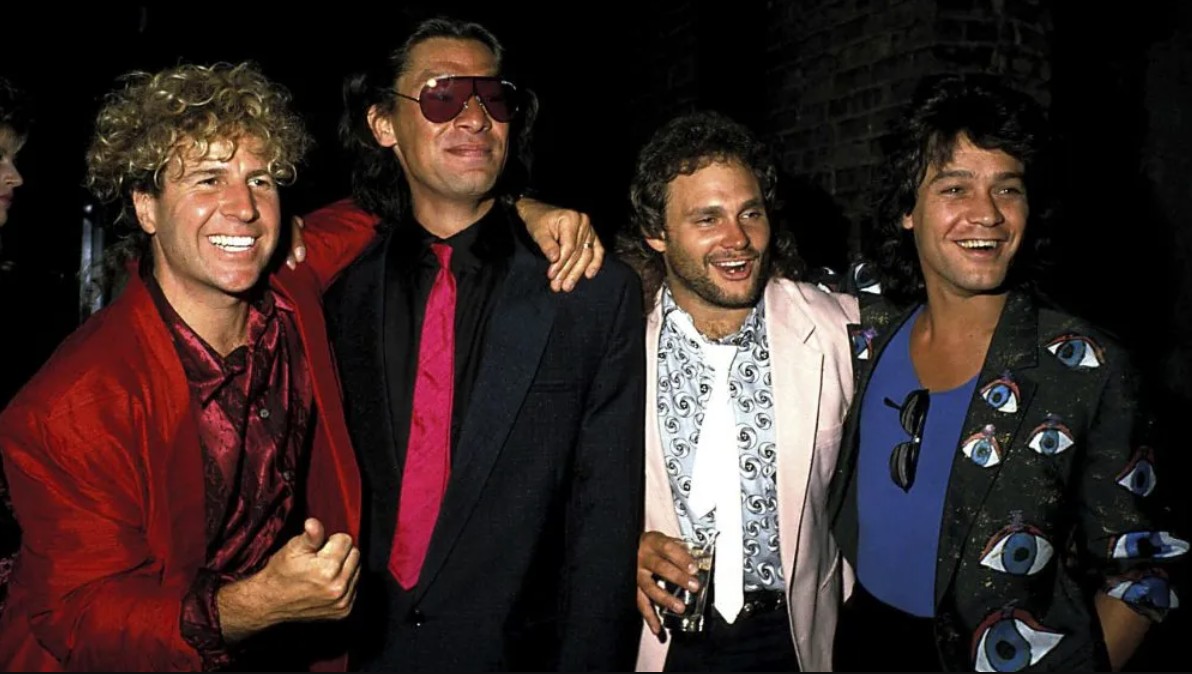
Oh, this one is beautiful, because the curse didn't merely visit Van Halen. It moved into the guest room and changed the Wi-Fi password and left the toilet unflushed.
Van Halen entered 1995 with Sammy Hagar singing and released Balance, their fourth consecutive No. 1 studio album with Hagar. Read that again: fourth consecutive No. 1 studio album.
Whatever argument people want to have about Dave versus Sammy, commercially Van Hagar was working just fine. The Sammy-era catalog included 5150, OU812, For Unlawful Carnal Knowledge and Balance. Four studio albums. Four No. 1 albums. You could hate Van Hagar with every fiber of your being and the cash register still said you were wrong.
Then things get weird. Sammy leaves. David Lee Roth suddenly returns to record two new songs. Van Halen releases its first career-spanning compilation, Best Of – Volume I, in October 1996, complete with those new Roth tracks. Fans understandably think, HOLY SHIT! DAVE IS BACK!
Dave was not back. Not really.
He appeared with the band at the MTV Video Music Awards, everybody got excited, everybody started imagining the reunion, and then Dave was gone again. So let's review: Van Halen has a No. 1 album, they lose Sammy, they bring Dave back, they release a greatest-hits album, and then they lose Dave again.
Van Halen soon after introduced Gary Cherone, and then came Van Halen III. I rest my case.
At this point the greatest-hits album isn't sitting near the crime scene. It's holding the fucking murder weapon. Van Halen didn't slowly fade away over fifteen years after its compilation. They drove directly off a cliff while everyone was in the passenger seat, reading the liner notes.
In 1995 they had a No. 1 album. In 1996 came the greatest hits. Shortly thereafter came a third lead singer, dramatically diminished commercial fortunes and an album that would become shorthand for “remember when Van Halen got weird?” The compilation basically drew the chalk outline.
CURSE EVIDENCE: Somebody call Mulder and Scully.
#2 · Blondie
2. Blondie — The Best of Blondie (1981)
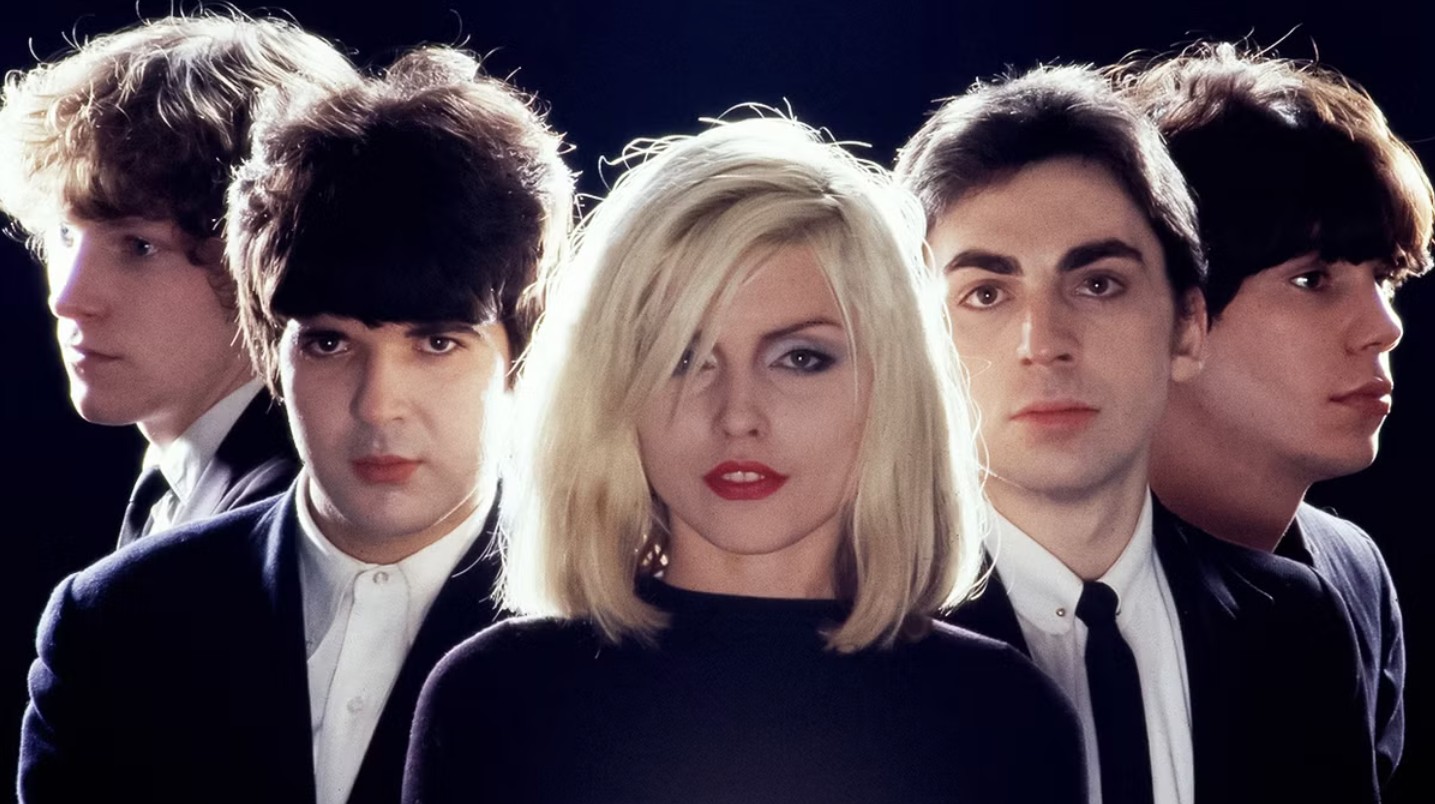
This is the case that made me stop laughing quite as hard. Blondie wasn't finished when The Best of Blondie came out. They were fucking huge.
Autoamerican had given them “The Tide Is High,” which went No. 1, followed by “Rapture,” which also went No. 1. And “Rapture” wasn't just another hit. It became a major cultural moment by bringing rap into the orbit of mainstream pop audiences in a way virtually nobody had done before.
This is a band coming off two chart-topping singles, and then in 1981 comes The Best of Blondie. Everybody admire the nice collection of hits. Nothing ominous happening here. Move along.
In 1982 Blondie releases The Hunter. It underperforms. The tour runs into trouble. Internal tensions that had already been developing get worse. Chris Stein becomes seriously ill, and by the end of that original run Blondie had effectively fallen apart, with the breakup becoming official shortly afterward.
That is an absolutely brutal sequence. Again, we're playing with a curse here, not conducting a criminal prosecution. A greatest-hits record did not cause Stein's illness, band tensions or any of the other factors involved in Blondie's breakup. But if we're searching for the moment where the universe stamped HERE on Blondie's timeline, it's sitting right beside The Best of Blondie.
Two No. 1 singles. Greatest hits. One more studio album. Goodnight. That isn't a red flag. That's a red flag being waved by a guy standing on top of another, much larger red flag inside of a red flag factory.
By now my little investigation had become one of those movie scenes where the detective hasn't slept in three days. Stale half empty coffee cups everywhere and his entire apartment wall is covered in photographs.
CURSE EVIDENCE: "This means something."
#1 · The Cars
1. The Cars — Greatest Hits (1985)
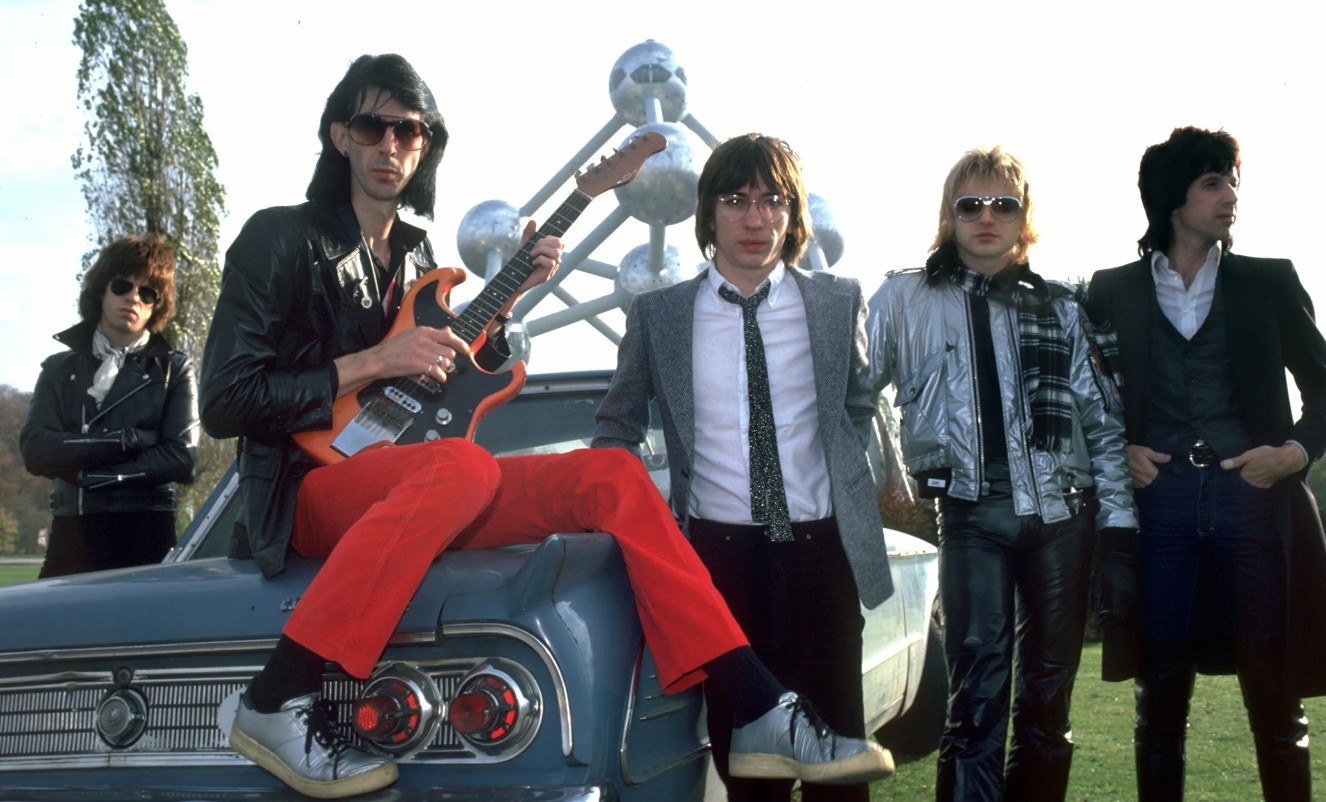
Ladies and gentlemen, I introduce you to our Patient Zero.
In 1984, The Cars released Heartbeat City, and it was gigantic. The album included massive hits like “You Might Think,” “Magic,” “Drive” and “Hello Again.” MTV loved them. Radio loved them. I loved them!
“You Might Think” won Video of the Year at the very first MTV Video Music Awards, while “Drive” became one of the band's biggest songs. This wasn't a veteran act limping toward nostalgia. The Cars had just made the biggest album of their career.
So naturally, in 1985: GREATEST HITS.
And then something happens. Or, more accurately, almost nothing happens. The band takes some time away. Ric Ocasek and Benjamin Orr pursue solo projects. They eventually reconvene for Door to Door in 1987, and Door to Door is not Heartbeat City. Not even by a long shot.
The album reaches only No. 26 in America. The singles don't have anything resembling the previous album's impact. The chemistry is deteriorating. Then the tour ends, and then The Cars end.
1984: Heartbeat City. 1985: Greatest Hits. 1987: Door to Door. 1988: broken up.
COME ON NOW!
If this were happening in a horror movie, this is the point where somebody finally realizes every victim watched the same videotape seven days earlier. The Cars survived six studio albums, changing musical trends, MTV, synthesizers and New Wave. Then they released Greatest Hits. Three years later there was no band.
At some point you stop calling them coincidences and start checking whether the CD booklet contains the Necronomicon.
CURSE EVIDENCE: Guilty. Sentence carried out in 1988.
So...Is the Greatest Hits Curse Real?
No. Yes. Probably. Maybe?
Look, obviously the greatest-hits album isn't actually destroying these bands. There's a very logical explanation for all of this. Record companies tend to release greatest-hits collections after an artist has accumulated enough hits to justify one. That usually means they've already been successful for years. Bands age. Relationships deteriorate. Musical tastes change. New generations arrive. Hairlines retreat. Eventually everybody's career declines.
That's the boring explanation. But it doesn't explain why the timing can be so goddamn creepy.
Blondie scores two No. 1 singles and then comes the greatest hits. Gone. The Cars release Heartbeat City, then the greatest hits. Gone. Mötley Crüe reaches its commercial peak, then the greatest hits. Vince gone. Van Halen scores another No. 1 album, then the greatest hits. Sammy gone. Dave gone. Gary Cherone.
Bryan Adams spends a decade assaulting the charts, releases So Far So Good, and...well...so far was considerably better.
There are survivors. Green Day released International Superhits! and then made American Idiot. Foo Fighters released Greatest Hits and followed it with Wasting Light. Queen released Greatest Hits in 1981 and still had “Radio Ga Ga,” “I Want to Break Free,” Live Aid and plenty more ahead of them. So the curse can be beaten if the band's Kung Fu is strong enough.
But if I were currently in a massively successful band and somebody from the record company walked into the studio carrying mock-ups for The Essential Peter's Band: The Greatest Hits, I'd burn them. I'd burn the mock-ups. I'd burn the recording studio and immediately start another studio album just to be safe.
Actually, forget that.
Release my greatest-hits album after I'm dead. I'm not giving that fucking thing the opportunity.