Reviews & Rants · Comics
Five Times the Hero Lost—and Absolutely Deserved To
By Peter David · August 6, 2026 · Cobra Kai Never Lies
Some heroes lose because the villain is stronger. Some lose because the odds are impossible. Some sacrifice themselves because saving everyone else matters more than making it home.
This isn’t about any of them.
These are the heroes who built their own trap, climbed inside and then acted surprised when the door slammed shut.
We’re also moving beyond the usual collection of Batman getting his back broken and Captain America dropping his shield. The entire comic-book world is open.
Major comic-book spoilers ahead.
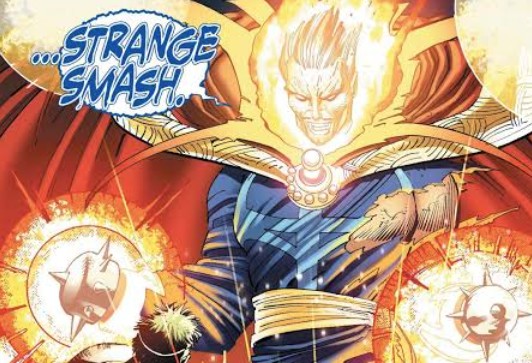
5. Doctor Strange Loses the Title of Sorcerer Supreme
Doctor Strange has lost the title of Sorcerer Supreme more than once, but the stretch following World War Hulk is the one that belongs here.
Strange helped the Illuminati launch Hulk into space. That alone was enough to earn him a spot on Hulk’s return itinerary. When Hulk came back looking for everyone responsible, Strange initially tried reaching Bruce Banner instead of simply beating him into the pavement. It didn’t work.
That’s when Strange called upon the power of Zom.
Zom wasn’t some harmless magical battery Strange could plug into for a quick power boost. He was an ancient mystical threat so dangerous that Strange knew using his power could unleash something he might not be able to control. Strange did it anyway because, like many brilliant men with unlimited access to forbidden knowledge, he believed the warning applied to everyone except him.
It not only gave him enough power to challenge Hulk and lose miserably, but it also stripped away his restraint. Strange endangered innocent people and ultimately lost because Hulk stopped the fight to save them while Strange—the supposed hero—had become too consumed by the power to do it himself.
That should’ve been the wake-up call.
Instead, Strange continued compromising himself with dangerous magic until the Ancient One finally told him what should’ve already been obvious: he was no longer worthy of being Sorcerer Supreme. When the Eye of Agamotto searched for the next person to carry the title, it passed Strange by and chose Brother Voodoo.
He didn’t lose the title because someone cast a stronger spell. He lost it because the man trusted to protect reality repeatedly decided that his judgment mattered more than the rules protecting it.
For a guy whose entire life began falling apart because he believed his hands made him untouchable, Stephen Strange still had a lot to learn about keeping those damn things away from powers he couldn’t control.
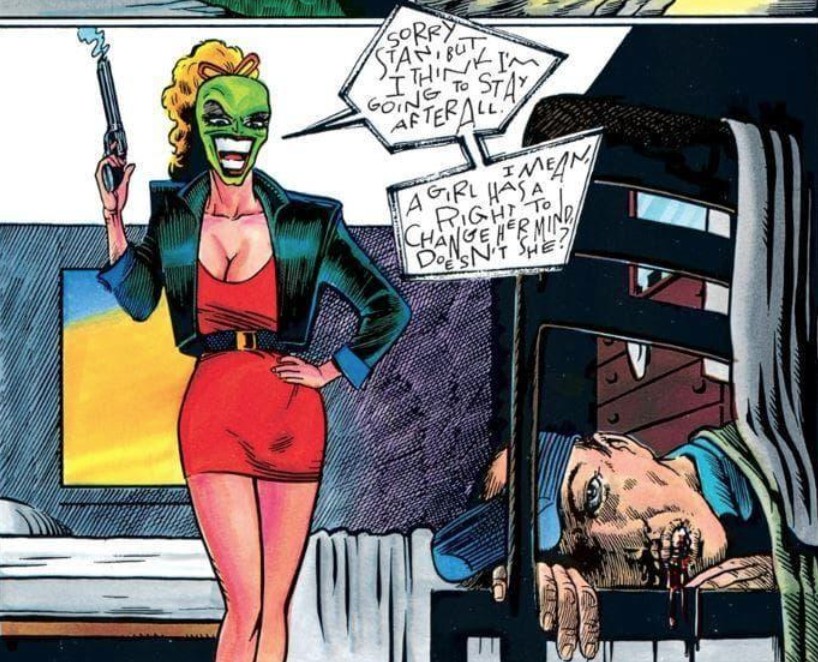
4. Stanley Ipkiss Loses His Life
Forget almost everything Jim Carrey taught you about Stanley Ipkiss.
The original Dark Horse version wasn’t a sweet, awkward bank teller who found enough confidence to dance with Cameron Diaz. This Stanley was angry, bitter and packed with violent fantasies about punishing everyone who annoyed or embarrassed him. Honestly, to even call him a hero is a stretch.
Then he found the Mask.
It didn’t turn him into a lovable cartoon character. It removed the few social and moral restraints keeping his worst impulses trapped inside. As Big Head, Stanley used its reality-bending power to settle petty grudges, terrorize people and murder anyone who got in his way.
He eventually removed the Mask and understood enough of what he’d done to know he needed to run. That still wasn’t remorse. Stanley wasn’t preparing to confess, destroy the Mask or accept punishment. He was packing his shit and trying to escape the consequences.
His girlfriend, Kathy, had already seen what he became. She put on the Mask herself and shot him in the back.
Stanley didn’t deserve to die because he was weak enough to be corrupted by a magical object. The Mask may have removed his inhibitions, but Stanley repeatedly chose to wear it again after seeing exactly what happened when he did.
The power didn’t create his anger. It simply gave his anger permission.
That’s one hell of a difference from the movie—and one hell of a deserved ending.
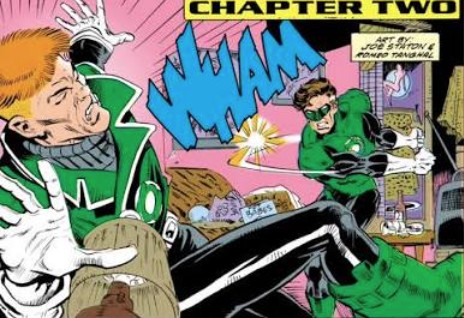
3. Guy Gardner Bets His Ring—and Loses It
Guy Gardner didn’t simply wear a Green Lantern ring. He built nearly his entire identity around deserving it more than Hal Jordan, and that belief ended up costing him the damn thing.
When Hal returned to Earth and wanted responsibility for Sector 2814 back, Guy refused to step aside. Hal tried to reason with him, but reason has rarely survived prolonged exposure to Guy Gardner. Guy wanted the issue settled in the only way his ego could understand: a fight.
The terms were Guy’s idea. The winner would become Earth’s Green Lantern. The loser would surrender his ring and quit the Green Lantern Corps.
That distinction matters. The Guardians didn’t strip Guy of his powers. Hal didn’t steal them. Guy put the ring on the table himself because he couldn’t imagine a world where he wasn’t the man walking away with it.
The fight began with both men using their rings and doing exactly what two allegedly responsible intergalactic law-enforcement officers shouldn’t do: tearing through New York City to settle a personal argument.
When the destruction became too much, they removed the rings and decided to finish it with their fists.
On paper, that should have favored Guy. He was younger, stronger and more physically imposing. He battered Hal and became increasingly vicious as the fight continued. Guy believed Hal was surviving solely through stubbornness and that one more punch would finally prove what Guy had been saying all along.
Hal was just playing rope-a-dope.
Once Guy had exhausted himself, Hal stopped absorbing the punishment and finished the fight. Guy woke up defeated, surrounded by the heroes and Lanterns who had watched his ego write a check his ass couldn’t cash.
Then Hal collected the ring.
Guy didn’t lose it because he lacked courage or willpower. He lost it because possessing one of the most powerful weapons in the universe still wasn’t enough for him. He needed everyone to agree that he deserved it more than Hal.
He created the contest. He chose the stakes. He turned a disagreement over responsibility into a public dick-measuring contest and then lost the one thing he couldn’t imagine himself without.
Guy Gardner bet his entire identity on being the better Green Lantern.
Hal ate his dinner and Guy ended up with the receipt.
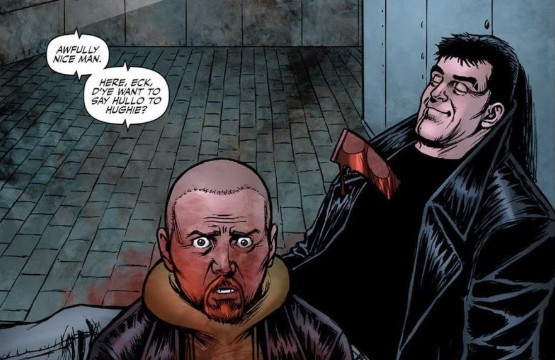
2. Billy Butcher Loses Everyone—and Then His Life
Billy Butcher spent most of The Boys convincing everyone—including himself—that there was a line separating him from the superpowered monsters he hunted. The Supes hurt innocent people. Butcher hurt Supes. The Supes abused their power. Butcher used violence to hold them accountable. The Supes treated ordinary people as disposable. Butcher built a team to protect them.
It was all bullshit.
Once Homelander and the Seven were dealt with, Butcher revealed the truth: stopping corrupt superheroes was never enough. He intended to kill everyone with Compound V in their system. Guilty, innocent, adult or child—it didn’t matter. He had carried his hatred for so long that he no longer needed his victims to deserve it.
The Boys would never allow that, so Butcher eliminated them too.
He killed Mother’s Milk himself. He arranged the explosion that killed Frenchie and the Female. These weren’t temporary allies or disposable soldiers. They were the people who followed him into Hell because they believed there was still a human being buried somewhere beneath all that hate.
Butcher proved them wrong.
That left Hughie.
Butcher had spent the series mocking Hughie’s compassion, testing his limits and trying to remake him in his own image. But Hughie’s refusal to become Butcher was ultimately the one thing Butcher couldn’t defeat.
Their final confrontation left Butcher critically injured. He lied about murdering Hughie’s parents, deliberately pushing Hughie into delivering the fatal blow. Hughie killed him with a broken piece of metal, and Butcher died smiling because even his own death had to be another act of manipulation.
He lost his team, his mission, Hughie and finally his life.
The son of a bitch deserved every bit of it.
Butcher spent years insisting that power revealed what people truly were. In the end, all his planning, authority and violence revealed exactly what he was too. Not the hard man willing to make difficult choices.
Just another monster who believed his pain gave him permission to choose who deserved to live.
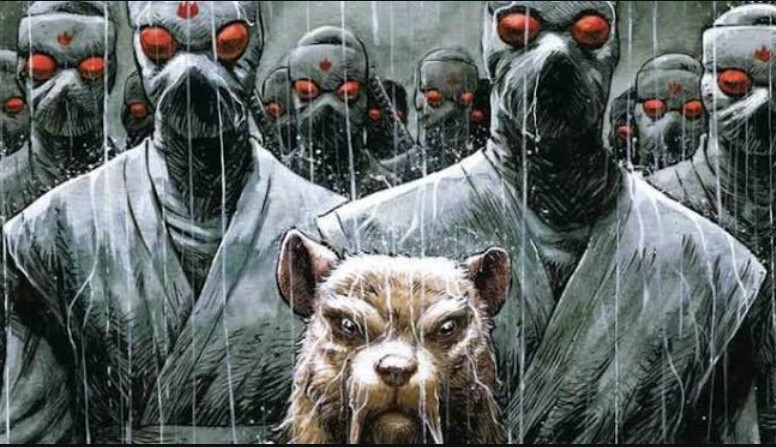
1. Splinter Loses His Family
Splinter’s fall hits harder than any broken back, lost title or superhero ass-kicking ever could.
For a lot of kids, the cartoon version of Splinter was the father they never had—or the father they wished they had. He was patient, wise, protective and strong without needing to prove it every five minutes. He didn’t just teach the Turtles how to fight. He taught them how to survive without becoming the people they were fighting.
That’s what makes his transformation in IDW’s Teenage Mutant Ninja Turtles such a worthy trespass into the childhood psyche.
After finally defeating Shredder, Splinter takes control of the Foot Clan. He believes he can reform it, end the cycle of violence and use its power to protect his family. It sounds reasonable because Splinter is the one saying it.
Then the compromises start and the cracks in the dam begin to emerge.
He starts making decisions through the cold logic of a clan leader rather than the values of a father and sensei. He accepts violence and manipulation as necessary tools. He expects obedience from his sons and treats their objections as immaturity instead of warnings that he’s becoming the exact kind of man he taught them to resist.
Michelangelo sees it first and refuses to follow him.
That rejection should have stopped Splinter cold. Mikey is the emotional heart of the family—the son most likely to believe in his father long after everyone else has started asking questions. When even he looks at what Splinter is building and walks away, the message couldn’t be clearer.
Splinter still refuses to hear it.
His sons don’t pull away because they stop loving him. They pull away because the father who taught them right from wrong begins treating those lessons like luxuries he can no longer afford. Splinter believes his wisdom makes him different from Shredder, even while demanding loyalty from the same throne and commanding the same organization through many of the same methods.
He defeated Shredder and then made the fatal mistake of believing he could sit in Shredder’s chair without becoming Shredder.
Splinter eventually recognizes what his choices have done, and his final sacrifice helps save his sons and restores a piece of the father they feared they had lost. That redemption matters—but it doesn’t erase the damage required to reach it.
He still fractured his family. He still betrayed the principles he gave his sons. He still forced them to stand against the man they had spent their entire lives trusting without question.
That’s why Splinter is number one.
Doctor Strange lost a title. Guy Gardner lost the ring that defined him. Stanley Ipkiss and Billy Butcher lost their lives.
Splinter lost the thing that made him Splinter.
The comic didn’t merely knock a beloved character off his pedestal. It grabbed one of childhood’s safest father figures, dragged him across the moral line and kicked the shit out of everything he once represented.
Sometimes the villain beats the hero and sometimes the hero saves the villain the trouble.