Reviews & Rants · Movie Rant
George Lucas Can Change Star Wars. But What About the Ones He Didn’t Direct?
By Peter David · September 27, 2026 · Cobra Kai Never Lies
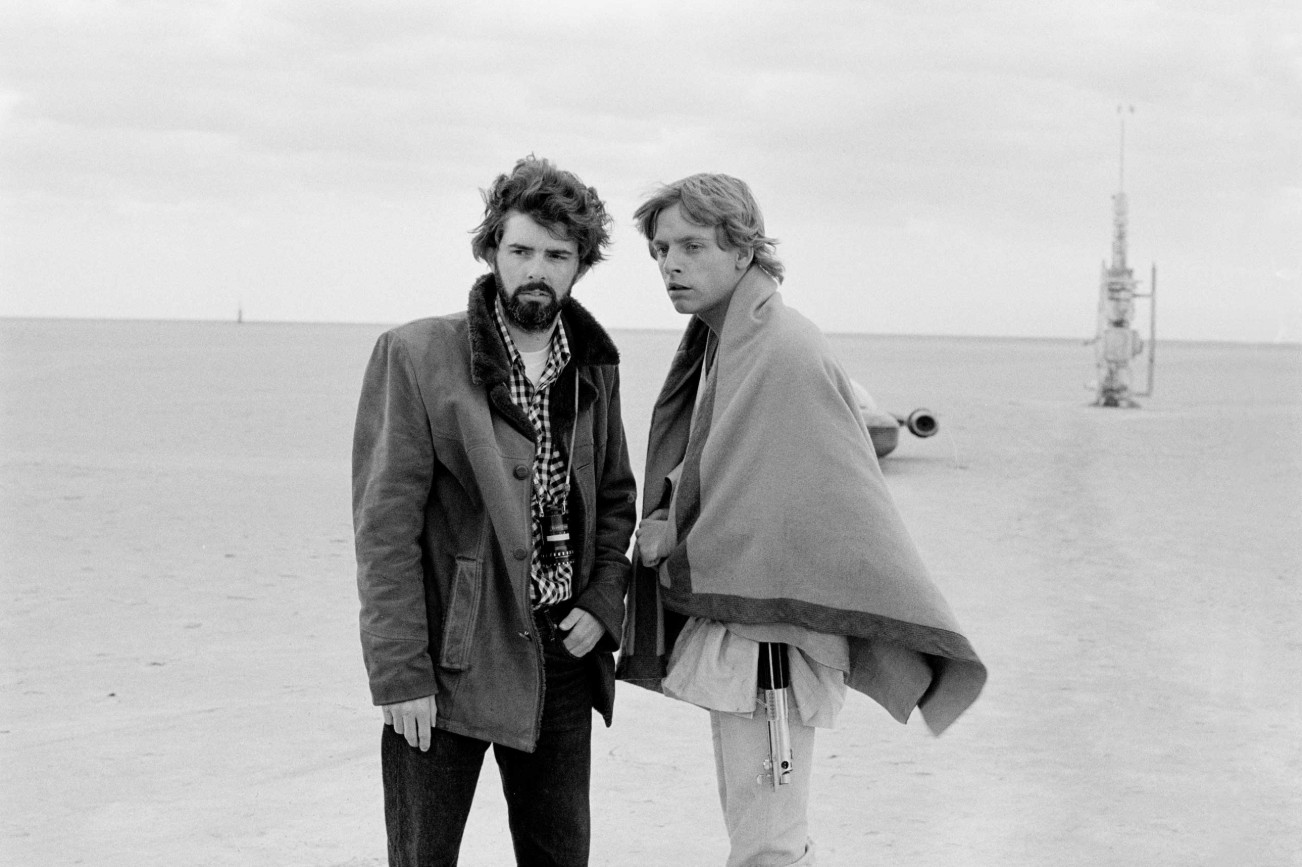
I don’t have a problem with George Lucas changing Star Wars. I start having questions when George Lucas starts changing somebody else’s movie.
George Lucas is defending the changes he made to the original Star Wars trilogy again, and I’m probably going to lose a few people right out of the gate here. I don’t really have a problem with him doing it.
Lucas recently told CBS Sunday Morning, “Most movies aren’t finished; they’re simply yanked out of your hands and put in the theaters.” His point is that a filmmaker eventually reaches a deadline, the movie has to be released, and there are always things left behind that the director wishes could have been done differently. I get that, and when we’re talking about the original Star Wars, I think he has every right to feel that way.
George Lucas wrote it. George Lucas directed it. George Lucas knows what he wanted that movie to look like better than I do, better than you do and certainly better than the guy screaming online that Han absolutely has to shoot first or civilization collapses. That doesn’t mean I have to like every change. Some of them work, some don’t, and a few have aged about as gracefully as CGI tends to age when filmmakers are busy showing us what computers can do instead of asking whether they should do it.
It’s his movie, and as a director he had a vision for the movie being made. If Lucas finally had the money and technology to finish things he couldn’t accomplish in 1977, I have a hard time telling the man who directed Star Wars that he isn’t allowed to touch it.
Then I started thinking about The Empire Strikes Back, and that’s where this stopped being quite so easy for me. George Lucas didn’t direct it.
Whose Movie Is It?
Irvin Kershner directed The Empire Strikes Back, and that’s not some technicality buried in the credits. Kershner made choices about performances, pacing, composition and character that helped turn Empire into the movie we know.
One of the most famous moments in the entire franchise exists because Kershner and Harrison Ford didn’t think Han Solo should respond to Leia’s “I love you” the way it had been written. “I know” became Han’s answer, and a moment that could’ve played like standard movie romance became completely Han Solo.
If the director matters that much while the movie is being made, then how much does the director matter twenty years later when somebody decides to start changing it? That’s where the idea that these are simply “George Lucas’s movies” gets a little more complicated for me.
Kershner was asked directly about the 1997 Special Edition of Empire, and his answer tells us a lot. “My film is the way I cut it.” There’s something wonderfully simple about that sentence, but Kershner wasn’t raging about George Lucas destroying his work. In fact, he was involved enough with the Special Edition process to review work in progress and make notes about color and sound. He said there were no cutting changes, and he didn’t seem particularly bothered by the additional Wampa material even though he admitted he could’ve lived without it.
There was even a change he loved, and it involved something he had wanted from the beginning. When Kershner originally shot the Cloud City corridors, he wanted openings in the walls so we could actually see the city outside, but money and time made that impossible. Years later, Lucas used digital effects to finally open those corridors up. When Kershner saw what had been done, Lucas told him, “It’s a gift for you.”
That’s about as far from somebody trampling over another director’s movie as you can get, and it makes this whole subject a lot more complicated. Kershner apparently had no major problem with what Lucas did to Empire, and Lucas even used the Special Edition to give him something he originally wanted but couldn’t have. Everybody seems happy in that situation, but Kershner still said something that stuck out to me.
“My film is the way I cut it.”
Then There’s Return of the Jedi
Richard Marquand directed Return of the Jedi, and unfortunately we can’t ask him what he thought about Lucas changing his movie. Marquand died in 1987, a full decade before the Special Editions arrived, which changes the conversation considerably.
Marquand clearly understood whose playground he was entering when he took the job. He was a huge admirer of Lucas and described himself as a Star Wars fan before directing Jedi. In an interview, he compared getting the opportunity to someone who knew Beethoven’s music being asked to perform it with the London Symphony Orchestra.
That doesn’t sound like a director walking onto the set and declaring himself sole owner of the place. It sounds like somebody who understood the scope of what Lucas had created and knew exactly whose universe he had been invited into.
Lucas was also heavily involved with Return of the Jedi. Accounts from the production describe Marquand concentrating more on the actors and photography while Lucas remained closely involved with the visual effects and other parts of the production. This wasn’t a situation where Lucas handed somebody a script, disappeared for six months and came back for the premiere.
Richard Marquand still directed the movie, though, and he talked about what he personally brought to Jedi, including a more theatrical, almost operatic quality. He made choices, directed actors and staged scenes. He put himself into the movie because that’s what directors do. Then Marquand died, and years later Return of the Jedi started changing.
Unlike Kershner, he never had the opportunity to look at those changes and say he loved them, hated them or simply didn’t care. That leaves me with a question I can't find a simple answer to. If the director isn’t there anymore to have a voice in what happens to his movie, how much should somebody else be allowed to change it?
The Snyder Cut Makes This Even Weirder
If you want to see how much we claim to value a director’s vision, look at Justice League. It’s obviously not the exact same situation, but it turns the question around in a way that’s hard to ignore.
Zack Snyder was the director of the film, but he left the production after the death of his daughter. Joss Whedon came aboard, substantial rewriting and reshoots followed, and the movie released in 2017 with Snyder’s name still sitting under “Directed by.” What followed turned into one of the strangest chapters in modern blockbuster filmmaking. Fans spent years demanding that Warner Bros. release Snyder’s version, and eventually the studio actually did it.
When Zack Snyder’s Justice League was announced, Snyder thanked Warner Bros. and HBO Max for “supporting artists and allowing their true visions to be realized.” That wording becomes awfully interesting when you place it next to what happened with the Star Wars Special Editions.
The entire argument behind the Snyder Cut was that the director’s vision mattered. It mattered enough for millions of fans to campaign for it, and it mattered enough for Warner Bros. to spend millions finishing another version of a movie that had already been released. The new version was literally sold to us with the director’s name in the title.
We accepted the premise that Justice League was Zack Snyder’s movie because Zack Snyder directed it. So now bring that same thinking back to Star Wars and things start getting uncomfortable. If Justice League belongs artistically to Zack Snyder even though Warner Bros. owned the movie, then how much of The Empire Strikes Back belongs artistically to Irvin Kershner? How much of Return of the Jedi belongs to Richard Marquand?
Owning a movie and directing a movie aren’t the same thing, and that's really the entire issue here. Lucas created Star Wars and controlled the franchise, but Kershner and Marquand were still the filmmakers hired to direct those two movies and put their own creative choices on the screen.
George’s Galaxy
None of this changes the fact that George Lucas created Star Wars. Without him there’s no Luke Skywalker, Darth Vader, Millennium Falcon, Jedi, Death Star or galaxy far, far away. He created the sandbox, financed these movies, shaped their stories and remained deeply involved even when somebody else was sitting in the director’s chair. Calling Kershner or Marquand hired hands doesn’t erase their work, though, and that’s where I land on this.
If George Lucas wants to change the movie George Lucas directed, have at it. Put another creature in Mos Eisley, adjust another effect or move Han’s blaster shot another tenth of a second if it makes you happy. I may like the original version better, but that doesn’t make it my movie.
Empire and Jedi make me hesitate because George Lucas wasn’t the director of either one. That doesn’t mean he suddenly stopped being the creator of Star Wars, and it doesn’t mean Kershner or Marquand somehow had more authority over the entire franchise than he did. It means directing has to count for something.
Kershner’s own words may be the best way to explain it. “My film is the way I cut it.”
He wasn’t angry, and he wasn’t starting a fight with Lucas. He was simply stating something filmmakers and audiences seemed to understand long before anybody started arguing about Special Editions: the director leaves something of himself in that movie.
That’s why I keep thinking back to Kershner and Marquand. Lucas created the world they were working in, but he also handed each of them a movie to direct, and once they did that work those films carried their ideas and choices too. Kershner was around to see Lucas revisit Empire and had a voice in the process. Marquand never got that chance.
Maybe that’s why I’m ok for the most part with Lucas changing Star Wars and still uneasy about Empire and Jedi. I don’t think there’s a clean answer here, but I do think the director’s name in those credits has to mean more than who happened to be sitting in the chair before somebody else decided the movie needed to change.