
Reviews & Rants · Movie Rant
What Happens When Success Becomes an Actor's Career Ceiling
By Peter David · November 12, 2026 · Cobra Kai Never Lies
One breakout role can build an acting career, limit the opportunities that follow, or leave a television star chasing movie stardom that never quite arrives.
Hollywood has a remarkable talent for turning somebody into a star and then spending the next twenty years seeing only the character who got them there. An actor can carry a hit series or become the face of a superhero and still struggle to land a different role. Sometimes it's the audience who can't see past the character. Sometimes it's Hollywood who doesn't even let the actor get into the audition room.
Before anybody starts shouting that these people made millions and should stop complaining, calm down now, that's not what we're talking about. Having some success isn't the same as reaching that same level of success consistently throughout your career. A blockbuster supporting part doesn't make you a bankable movie star, and a long television career doesn't mean you broke through in theaters. Neither of those, of course, makes somebody a failure. It means their biggest role may have just cut a check the rest of their career simply couldn't cash.
WHEN FAME STARTS CLOSING DOORS
Xochitl Gomez gave us a particularly strange example just this month. She played America Chavez in 2022's Doctor Strange in the Multiverse of Madness. It's the kind of opportunity young actors spend years hoping to land. But in November interviews with Bustle and Galore, she said that afterward casting people assumed she was too expensive, too recognizable or too busy with Marvel to consider for other parts. "Wait, I want to do the cool indie movies. Give me a chance, guys," she told Bustle. Some potential employers apparently decided she just wasn't available without asking.
That's a ridiculous position for an actor to be in. She gets a Marvel movie on her résumé, and suddenly the same achievement that should help her secure an audition becomes a reason not to offer one. Gomez isn't describing a box-office ceiling or an audience refusing to accept her as somebody else. She's talking about doors closing because other people made their own assumptions. She's still building her career and those people just deciding her options for her is not only shortsighted but unfair to an up-and-coming actress that has shown a ton of potential.
Gaten Matarazzo is dealing with a different version of the problem. After growing up as Dustin Henderson through five seasons of Stranger Things, he told Us Weekly in April that casting teams tend to see what he already did and imagine him in something similar. "I would love to jump into something starkly different [after Stranger Things], but there is a tug of war there," he said. He understands why. His 2026 comedy Pizza Movie gives him a chance to try something different, though even there he's playing another outsider. He also knows he's fortunate to have choices at all.
Jenna Ortega has talked about being identified with Wednesday Addams and the horror roles surrounding it. Her recent Vogue profile follows her efforts to choose different work, while director Mary Bronstein describes the boxes Hollywood has placed her in. Ortega is successful and busy. "It'll always be something people think of when they see me," she told Vogue about Wednesday. Yet even she has to think about how quickly a career can be reduced to one facial expression and a black dress.
THE CHARACTERS WHO NEVER REALLY LEAVE
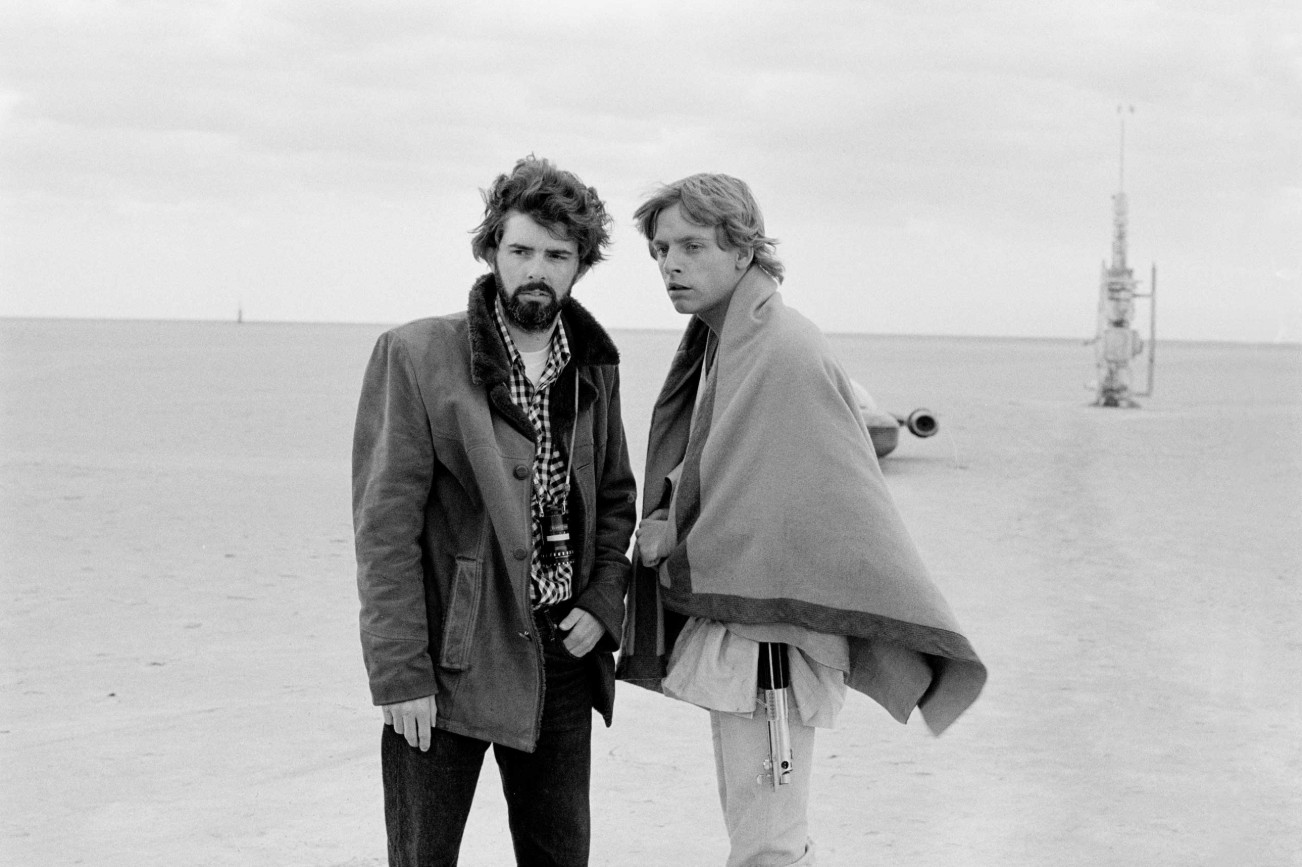
Mark Hamill and Carrie Fisher are probably two of the clearest and best legacy examples. Star Wars made them international stars, and neither went on to build a theatrical leading career comparable to Harrison Ford's. Ford became Indiana Jones and led hits across genres. Hamill remained Luke Skywalker to an enormous part of the public, and Fisher remained Princess Leia. Same franchise, very different trajectories.
Hamill eventually found another iconic role as the voice of the Joker, and he built a huge career in animation and video games. He told NPR in 2025 that voice work let him be cast for his abilities, rather than his appearance. "Voiceover saved my life," he said. We've already covered how Hamill ended up voicing the Joker after Tim Curry recorded the role, and that story says plenty about how a different medium can give someone room to surprise an audience. That was major success beyond Luke, even if it wasn't movie superstardom.
Fisher's story deserves to be in that same galaxy. Hamill recalled her once telling him, "Get over yourself. You're Luke Skywalker. I'm Princess Leia. Embrace it." She acted in films including When Harry Met Sally and The Blues Brothers, but her other great career was in writing. She wrote the bestselling Postcards from the Edge, adapted it for the screen and became an in-demand script doctor. That was a successful career, but she never became another major theatrical star after Leia. Hamill found another beloved performance; Fisher found a different kind of professional success. Neither of those accomplishments ever made Star Wars disappear from the front of their names nor should it.
Brandon Routh presents another twist. He got Superman, which should be the kind of casting that changes a career forever. Superman Returns made about $391 million worldwide, but against a reported $232 million production budget it didn't become the franchise-launching triumph many expected. In a 2019 CBS interview, Routh said, "I thought this would be my future for a couple of films. That didn't happen the way that I planned." Routh didn't emerge as a major theatrical leading man. Years later, he found steady, recognizable work as Ray Palmer, the Atom, on Arrow and Legends of Tomorrow. A completely different DC hero, and a genuinely substantial television run.
Then, for the Arrowverse's Crisis on Infinite Earths crossover, Routh put the Superman suit back on. There is something almost painfully fitting about that. He had spent years proving he could play somebody else, and one of the biggest moments of his later superhero career was being invited to return to the first character. He also played my favorite evil ex in the brilliant Scott Pilgrim vs. the World. Some success, absolutely. Another theatrical breakthrough on Superman's scale? Eh, not so much.
LIKABLE DOESN'T MEAN BANKABLE
The television-to-movie ceiling might be the strangest part of this whole discussion because the industry still seems determined to treat movies as the promotion and television as the job you had before you made it. Jennifer Garner is the example I tend to think about first with this scenario. Alias made her a star. Looking back on the series in a 2026 Vanity Fair interview, she said, "No one had thought of me for action. No one had thought of me for a tough role." She led an action series and got theatrical opportunities, too. The trouble is that relatively few of those films demonstrated that audiences would turn out specifically for Jennifer Garner.
13 Going on 30 is the obvious success story. It's beloved (even I love it and have seen it multiple times), she's the center of it, and it earned about $98 million worldwide. Elektra, where she was supposed to carry her own superhero movie, earned about $57 million against a reported $65 million production budget. Miracles from Heaven was a legitimate commercial success, earning nearly $74 million on a $13 million budget, and it would be unfair to pretend otherwise. Appearances in Juno, Valentine's Day and Deadpool & Wolverine don't establish that she sold the tickets.
Even Alexander and the Terrible, Horrible, No Good, Very Bad Day came with a hugely successful children's book behind it, Disney marketing and Steve Carell sharing the lead. Garner was a nice anchor for that movie. Helping a film work and selling tickets are different jobs. She's absolutely likable, not bankable. That's the argument Hollywood seems to make when it's deciding whose name can open a movie.
What's fascinating here is where Garner continues to thrive. In 2026 she returned for a second season of The Last Thing He Told Me and starred in The Five Star Weekend, which Peacock called its most-watched scripted series. Television keeps putting her in the center of the story, and audiences keep showing up. Maybe the problem isn't that Garner never became a star. Maybe it's that we've spent decades insisting the kind of star she already is somehow counts less.
Alan Ritchson makes that question current all over again. Reacher turned him into a leading action star on television, and he told The Washington Post that forty film offers landed almost immediately after the show broke out. So let's not say nobody wants to hire him. But his 2026 theatrical films Motor City and Runner brought in roughly $3 million and $19 million worldwide, respectively. Those numbers don't establish him as a theatrical draw.
That doesn't prove he can't become one, either. Box office is affected by marketing, release strategy, the movie itself and a dozen other things no actor controls but we still blame on them. Ritchson also continues to work across film and streaming, so this isn't a story about a man whose career has stalled in any way. It's a story about how a performer can be enormously popular in one format without having equivalent drawing power in another. If millions of people want to watch Reacher from their couches, why are we treating their enthusiasm as less impressive than two hours of their time and $18 for a movie ticket?
WHO'S ACTUALLY PUTTING THEM IN THE BOX?
We've watched versions of this argument for decades. David Caruso left NYPD Blue looking for a film career that never took off as hoped, then found another huge television success on CSI: Miami. George Clooney managed the crossover from ER to major film stardom. Henry Winkler spent years dealing with the shadow of Fonzie before audiences saw different sides of him in projects such as Barry. As Winkler told TODAY in 2023, "There were eight or nine years at a time when I couldn't get hired because I was 'The Fonz.'" These actors didn't all receive the same opportunities, make the same decisions or want the same careers. Calling them failures misses the point completely.
There's also an assumption that every actor is desperate to escape their most famous character. Jason Alexander has said he doesn't particularly care if audiences always see George Costanza when they look at him. "I have no desire to only do things that will dispel your image of me as George Costanza," he told WBEZ in 2024. That's a reasonable attitude. Playing an iconic role is a gift most actors never receive. Some are happy to work consistently and be remembered for something millions loved. We don't get to declare their careers disappointing because they didn't become something we imagined for them.
But casting directors shouldn't make that choice for them, either. If Gomez wants an indie film, ask whether she's available. If Matarazzo wants to play against type, give him a chance to audition. If somebody who played Superman or spent ten years playing a television character wants to be seen as another person, maybe watch the audition before telling them what their limits are. We can acknowledge the luck involved in landing an iconic role without pretending it should dictate every role that comes afterward.
Hollywood wants performers to be unforgettable. That's how stars are made. The least it could do afterward is remember that the character everyone fell in love with was somebody doing a job. And the whole point of acting is that they ought to be allowed to do another one.