News · Games
Sony Says You Don’t Own Your PlayStation Games. Haven’t We Talked About This?
By Peter David · August 31, 2026 · Cobra Kai Never Lies
Sony is arguing in federal court that buying a digital PlayStation game doesn’t mean you own it. That sounds strangely familiar.
A little while ago, I wrote about the increasingly strange definition of ownership in the digital age. The basic argument was pretty simple: if I hand you money or you put a button in front of me that says “Buy Now,” it seems reasonable for me to think I just bought something. Looks like Sony wants to revisit that conversation, only this time with lawyers involved.
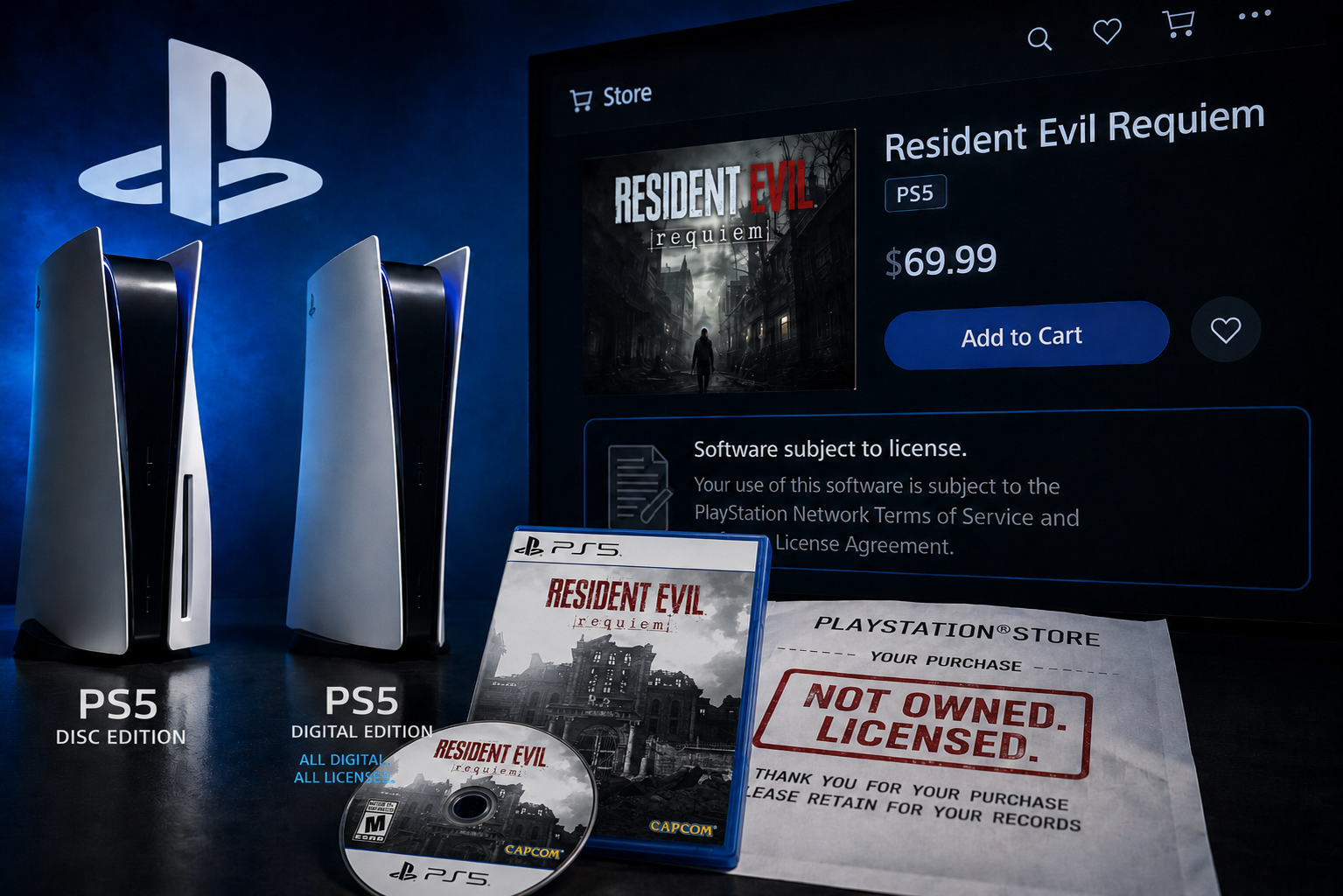
A class-action lawsuit filed in June by four PlayStation customers accuses Sony of failing to clearly disclose at the point of sale that digital games purchased through the PlayStation Store are actually licenses rather than property owned by the customer. Sony responded in federal court on August 21, arguing that its terms make the licensing arrangement clear and that reasonable consumers should not believe they own the digital games they purchase. So the Buy Now button means buy, except for the part where you apparently should know it doesn’t.
If this is giving you déjà vu too, there's a reason. In Physical Media Isn’t Perfect. Digital Ownership Is Still a Scam., I already wrote about the fundamental problem with companies selling digital products using the language of ownership while reserving rights that look a whole lot more like a rental agreement. Sony has now been kind enough to take that argument out of the hypothetical column and put its own version of it into a federal court filing.
Sony’s argument in this case manages to make the issue even stranger. According to its filing, two of the plaintiffs purchased Resident Evil Requiem eleven days apart, and Sony argues that if the first customer actually owned the game, Sony couldn't have sold it to the second customer. Looks like we've been misunderstanding this whole retail deal for a very long time.
That comparison seems to confuse owning a copy of something with owning the intellectual property itself. I own a copy of Resident Evil Requiem, but I don't own Resident Evil, Capcom, Leon Kennedy or the right to start producing my own Resident Evil games. Nobody walks out of a store with a Blu-ray believing Warner Bros. can never sell another copy of The Matrix because somebody already bought one, and I’m fairly certain nobody at Sony actually believes that is how buying things works either.
The lawsuit ultimately centers on language, disclosure and what consumers are being told they are buying. Sony’s own PlayStation software license agreement says the software is licensed rather than sold and describes the customer’s rights as limited and revocable, so there is no mystery about what Sony believes the transaction actually is. The problem is that Sony wants the storefront to speak the language of ownership while the legal fine print says something very different.
That is exactly what bothered me the first time we talked about this. If the word Buy needs a lawyer standing next to it explaining what it really means, then maybe the problem is not that consumers are confused.