Reviews & Rants · Movie Review
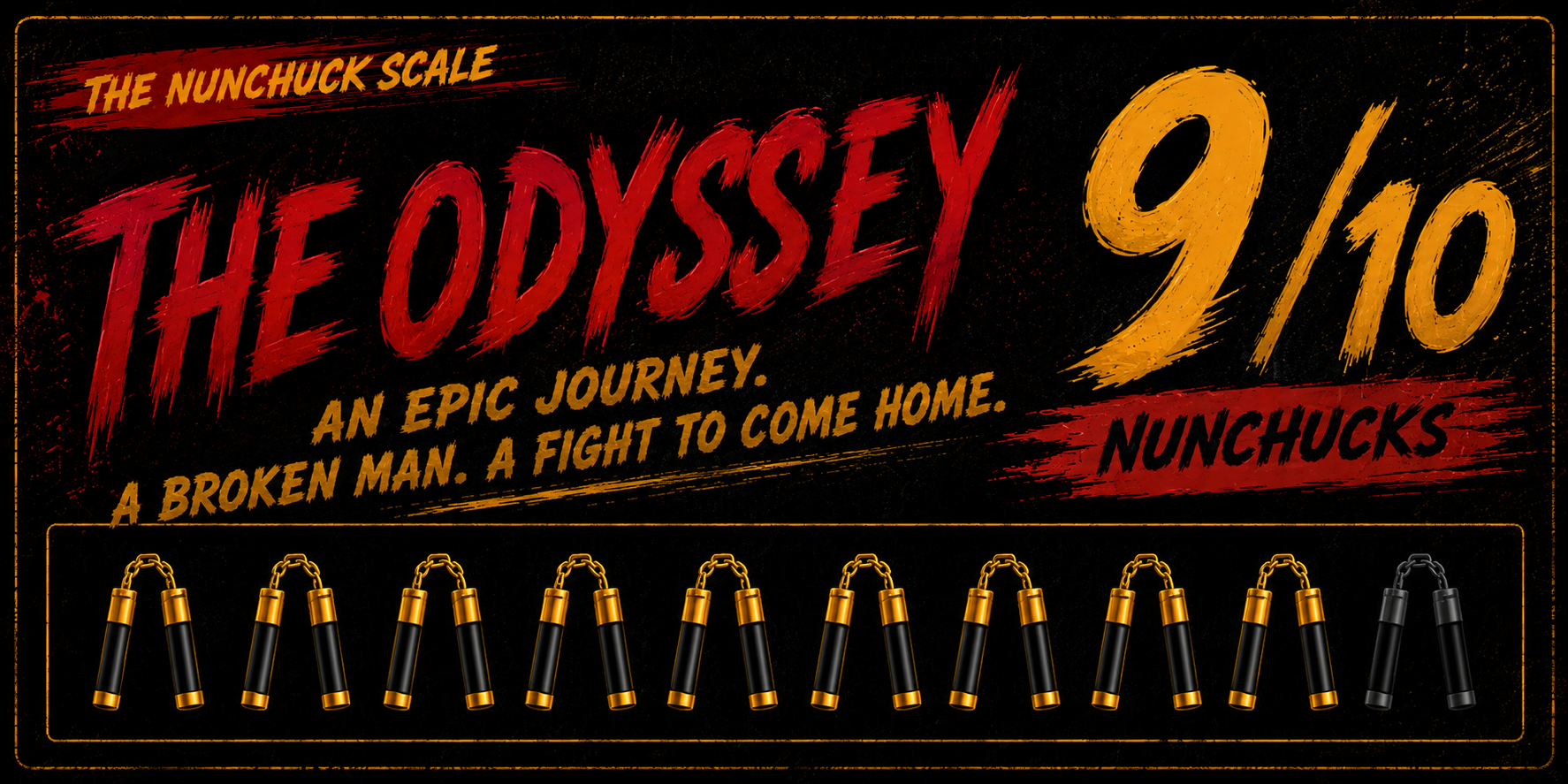
The Odyssey Is A Monumental Achievement, Even When The Journey Moves Too Fast
By Peter David · July 16, 2026 · Cobra Kai Never Lies
Christopher Nolan turns Homer’s epic into a breathtaking examination of war, guilt and whether a broken man can ever truly come home.
Christopher Nolan’s The Odyssey is an achievement in cinema. It isn’t perfect, and calling it an achievement doesn’t require pretending every choice works, but this is the kind of massive theatrical experience that reminds you why movies like this deserve to be seen on the biggest screen possible.
I didn’t see it in IMAX because I hate LieMAX. I saw it in Dolby, where the visuals were breathtaking and Ludwig Göransson’s score immediately announced itself as one of the movie’s greatest strengths. The sound itself never quite worked, although I’m not sure how much of that was the theater and how much was Nolan doing his usual sound bullshit.
About twenty minutes into the movie, our theater lost the sound completely. They had to stop it, rewind and start again. Naturally, they rewound too far, adding another five minutes to the experience while everyone sat there wondering how a building capable of shaking our internal organs couldn’t find the correct spot in the movie.
Even with the technical interruption, The Odyssey never felt like it was nearly three hours long. That may be the biggest compliment I can give its pacing. The movie is never boring.
The scale is enormous, but Nolan doesn’t use that scale simply to parade expensive images across the screen. Ships, armies, storms and monsters surround Odysseus, but the real journey is happening inside him.
This is a man trying to come to terms with ten years of war, what that war did to his soul and the terrible things he committed against both humanity and the gods. He isn’t simply trying to find his way back to Ithaca. He’s trying to find his way back to normalcy. He’s trying to come out of the clouds of war and figure out whether he still knows how to live.
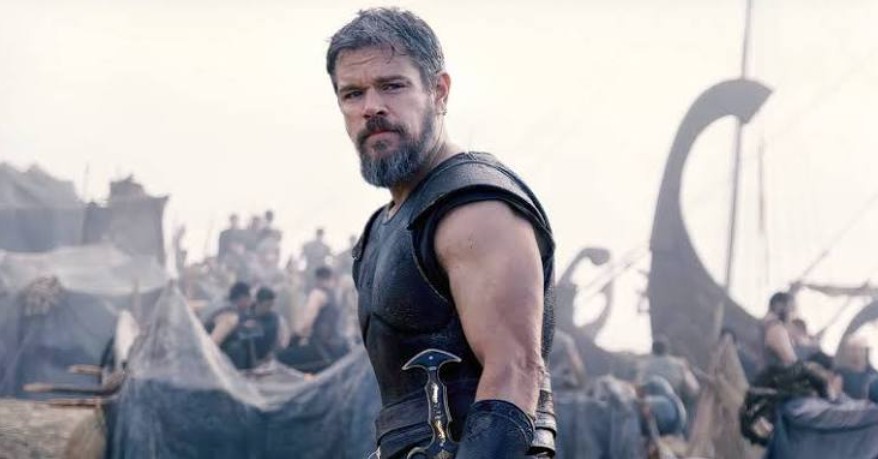
Matt Damon is incredible as Odysseus.
I was worried I’d spend three hours thinking I was watching Will Hunting take an extended Mediterranean vacation. That concern disappeared quickly. Damon completely sold me as Odysseus, carrying the weight of years away from his family in every part of his performance.
You feel his longing for home, the destruction of his soul and the righteous anger of a man trapped in a position created by gods who seem determined to keep moving the finish line. You also feel his hubris and his PTSD, which I believe are the real focus of Nolan’s movie.
Damon doesn’t play him as a clean or uncomplicated hero. Odysseus is brilliant, angry, proud, traumatized and frequently responsible for making his own suffering worse. The gods may punish him, but he gives them plenty to work with.
Each obstacle feels like another level of guilt or trauma that Odysseus has to pass through. He doesn’t approach every challenge the same way because he isn’t the same man by the time he reaches the next one. Sometimes he relies on intelligence. Sometimes pride. Sometimes anger. Sometimes he looks like he’s surviving through nothing more than momentum.
As his ships and crew become more broken, Odysseus breaks with them. The question eventually becomes more than whether he’ll make it home. You begin wondering whether this man can possibly put himself back together once he gets there. More importantly, does he even want to?
There’s almost a Wizard of Oz quality to the journey. Dorothy had the power to return home, but she still needed to complete the journey before she understood how to use it. Did Odysseus have the ability to get home sooner, or did he need to experience every part of this voyage before he was capable of becoming the man who could live there again?
Home isn’t simply Ithaca. Home is becoming a husband, father and human being again after spending twenty years becoming something else.
That’s where The Odyssey works best. Nolan has created a mythological epic, but beneath all that size and spectacle is a story about a veteran trying to survive the return from war. Odysseus isn’t only sailing toward his family. He’s attempting to rebuild the person who left them.
The pacing works wonderfully on a larger level, but the individual stops along the journey don’t always receive the same care. Nolan occasionally takes his time, allows a sequence to breathe and carefully plants the seeds for what follows. Other times, you’ve barely grasped the place, threat or character in front of you before the movie moves on.
The film itself never feels rushed, but parts of the journey do.
I understand that a story this large has to keep moving. Nolan couldn’t give every location its own forty-minute movie unless Universal wanted to release The Odyssey as a trilogy and sell us three different Trojan Horse popcorn buckets. Still, some of these stops deserved more time than they received.
The acting is phenomenal across the board.
Tom Holland is excellent as Telemachus, giving the son of Odysseus the right combination of vulnerability, anger and strength. He’s living beneath the shadow of a father who has become more legend than man, and Holland makes that burden feel real.
Jon Bernthal is also fantastic as Menelaus. Bernthal brings his usual intensity, but he doesn’t simply recycle the same angry man performance we’ve seen before. There’s damage beneath the surface, and he makes every moment count.
Lupita Nyong’o has only around four minutes of screen time, almost entirely as Helen of Troy, but she makes those minutes count. Her second role is little more than a brief glimpse, so this isn’t some enormous dual-performance showcase. Nyong’o simply knows how to enter a movie, command your attention and leave before the script has time to waste her.
Charlize Theron and Samantha Morton also make strong impressions in roles that are better left unexplained here. Both bring real weight to the movie without the review needing to ruin what Nolan is doing with them.
Elliot Page also brings real weight to Sinon despite having limited screen time. The role is small, but Page makes it feel like a character rather than a glorified cameo.
Robert Pattinson is sleazily perfect as Antinous. He has become remarkably good at playing men who look like they’d leave a film of moral decay on anything they touch. Every moment he’s on screen feels unpleasant in exactly the way it should.
Zendaya was the only performer who initially didn’t feel like she was completely holding her own against the rest of the cast. Her Athena felt distant in a way I wasn’t immediately sure worked. By the end, however, I began to understand what Nolan saw in her and why that emotional distance may have been the point.
Then there’s Anne Hathaway as Penelope.
What can I say? She’s stunningly elegant and, as usual, one of the best parts of any movie she enters. Penelope represents everything Odysseus believes he’s fighting to reclaim, but Hathaway makes her feel like far more than a prize waiting at the end of his journey. She brings intelligence, sadness, strength and dignity to every scene.
The music deserves just as much praise as the acting.
Ludwig Göransson’s score is breathtaking. It may honestly be the secret star of the movie. The music is always present when it needs to be, but it never feels like it’s overpowering the visuals or ordering the audience to feel something.
During the largest set pieces, the score becomes physical. Either the Dolby seats were buzzing harder than usual or you could genuinely feel the music moving through the theater. Whatever caused it, that’s what a score for a movie like this should do.
Give Göransson the Oscar now and save everyone the trouble of pretending there’s still a competition.
The Odyssey isn’t flawless. Some pieces of the journey move on before they’ve received their due, and the sound may test your patience depending on where Nolan’s mix ends and your theater’s incompetence begins.
Still, this is a monumental piece of filmmaking. It’s visually astonishing, emotionally intelligent, beautifully acted and carried by a score that deserves to be experienced through a theater sound system powerful enough to rearrange your internal organs.
Christopher Nolan has made a film about gods, monsters and one of the greatest journeys ever told. More importantly, he has made a film about a broken man trying to decide whether surviving the war was enough, or whether he can still find a reason to live after it.
The Odyssey understands that surviving the war is only the beginning.
The harder battle is learning how to live after it.